Monthly Archives

November 2026

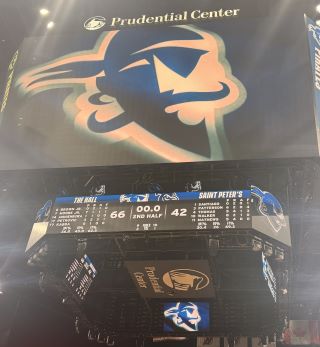
Newark, N.J. — Seton Hall delivered a commanding performance Monday night, defeating Saint Peter’s 66–42 at Prudential Center. A combination of aggressive defense, physical interior play, and effective transition offense helped the Pirates establish control in the first half before pulling away for a convincing victory.

Both teams entered the contest with noticeable defensive intensity, creating a physical atmosphere early. Man-to-man defense was the primary approach throughout much of the game, although 2–3 zone coverage also made appearances. The defensive pressure from both sides challenged offensive execution and created a competitive opening stretch.

However, Seton Hall eventually found its rhythm and began separating itself from Saint Peter’s.

One of the most significant turning points came during the first half when Seton Hall put together a game-changing 17–2 scoring run, sparked by a dunk from forward Terry Copeland Jr.

Copeland emerged as one of the Pirates’ most noticeable offensive contributors. His physical presence in the low post allowed him to play aggressively against opposing defenders, while his ability to run the floor effectively in transition added another dimension to Seton Hall’s offensive attack.

At 6-foot-9, Copeland demonstrated good mobility and a willingness to establish himself offensively around the basket. His aggressiveness in the post and ability to contribute during transition opportunities were particularly impressive.

Despite those positive attributes, Copeland showed areas requiring further development, particularly his post footwork. Refining his positioning, balance, and movement around the basket could help him become a more polished offensive player.

The Pirates’ first-half surge helped them establish an 18-point advantage, entering halftime ahead 36–18.

Despite Saint Peter’s struggles, guard Bryce Eaton stood out with his aggressive mentality on both ends of the floor.

Eaton opened the game applying strong on-ball defensive pressure while consistently looking to attack the basket offensively. His willingness to penetrate toward the rim demonstrated confidence and an aggressive scoring mindset.

Beyond his ability to attack the defense, Eaton displayed encouraging shot-making and strong verbal communication with teammates. His communication was especially noticeable during offensive possessions, where he remained vocal and actively engaged with teammates.

This aspect of Eaton’s performance stood out as an encouraging indicator of his court awareness and potential leadership qualities.

Eaton also played the majority of the second half, maintaining a significant presence within Saint Peter’s rotation. His offensive aggression, defensive pressure, and communication made him one of the Peacocks’ most notable performers.

After establishing a comfortable halftime advantage, Seton Hall continued to control the overall direction of the contest. Saint Peter’s was unable to overcome the early deficit, and the game eventually developed into a runaway victory for the Pirates.

The contrast between the teams’ offensive performances became increasingly apparent as Seton Hall maintained its advantage. The Pirates’ aggressive approach, combined with their ability to generate momentum through physical play, helped define the matchup.

Defensively, the use of man-to-man pressure and occasional 2–3 zone coverage provided important tactical elements to observe throughout the game.

Final Takeaways

Seton Hall’s 66–42 victory highlighted the importance of defensive intensity, offensive aggression, and momentum-changing plays. Copeland’s physical post presence and transition ability were significant individual observations, while Eaton’s two-way aggression and offensive communication provided Saint Peter’s with an encouraging individual performance.

For Seton Hall, the victory demonstrated how a decisive first-half scoring run can establish control over a game. For Saint Peter’s, the matchup revealed areas to evaluate as the team works to improve its overall offensive consistency.

The Pirates ultimately secured a convincing 24-point victory, with their first-half surge serving as the defining moment of the night.

This article was written by Jarrett Pinckney of NetScouts Basketball. You can follow us on Instagram, or on twitter.

We are looking for those interested in our basketball scout apprenticeship program. For information contact us and forward your resume.
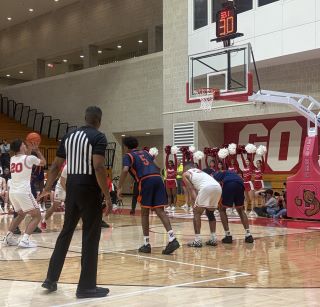
Ithaca, N.Y. — Cornell secured a hard-fought 86-85 victory over Pepperdine on Monday,in a matchup that featured physical play, perimeter shooting, multiple lead changes and a dramatic finish. The Big Red overcame a size disadvantage and late-game pressure behind strong individual performances from Jacob Beccles, Mateen Rafiq and Kaspar Sepp.

The opening half featured an intense back-and-forth battle as Pepperdine looked to exploit its size and athleticism advantages. The Waves consistently attacked the paint, created opportunities around the basket and knocked down difficult shots.

Cornell responded with impressive perimeter shooting, led by Ian Imegwu, who connected on three three-pointers to help keep the Big Red within striking distance. Jacob Beccles also provided an early offensive spark, knocking down a three-pointer and contributing to Cornell’s offensive rhythm.

Mateen Rafiq gave Cornell another perimeter threat, connecting on his first three-point attempt and helping create scoring opportunities for his teammates.

Turnovers created early problems for Cornell, while missed layups prevented the Big Red from taking full advantage of several offensive possessions. Pepperdine capitalized on those missed opportunities, using its size to attack the basket and draw fouls. The Waves drew 10 first-half fouls while consistently putting pressure on Cornell’s interior defense.

Despite the size disadvantage, Cornell competed physically and generated fast-break opportunities to offset Pepperdine’s inside presence. Both teams experienced costly turnovers, contributing to several lead changes throughout the half.

Cornell entered halftime with a 46-40 advantage, shooting 49% from the field and an impressive 50% from three-point range.

Cornell came out aggressively after halftime, knocking down multiple three-pointers and applying tighter defensive pressure. The Big Red continued to show their ability to compete against Pepperdine’s size through perimeter shooting and improved offensive execution.

Beccles emerged as Cornell’s leading offensive contributor, finishing with a game-high 19 points on 7-of-12 shooting, including 4-of-6 from beyond the arc. His ability to score both inside the paint and from the perimeter gave Cornell a consistent offensive presence. Most importantly, Beccles delivered when it mattered most, converting the game-winning layup with 24 seconds remaining.

Rafiq also played a significant role in Cornell’s offensive production, finishing with 17 points on 6-of-9 shooting and 4-of-6 from three-point range. His perimeter shooting helped stretch Pepperdine’s defense and provided valuable scoring support, particularly during the second half, when he scored 10 points.

Sepp added 13 points on 5-of-9 shooting, including a three-pointer. His efficient scoring gave Cornell another offensive option and helped maintain the team’s momentum throughout the contest.

Pepperdine received an outstanding individual performance from Alex Constanza, who led the Waves with 25 points, nine rebounds and two steals. Constanza consistently created scoring opportunities and helped keep Pepperdine within reach as the game moved toward its closing minutes.

Petar Majstorovic contributed 15 points, providing another important scoring option for the Waves. His offensive production helped Pepperdine remain competitive despite Cornell’s attempts to extend its lead.

Evan Haywood added 14 points and four steals, making an impact on both ends of the floor. His defensive activity created problems for Cornell’s ball handlers, while his scoring helped fuel Pepperdine’s comeback efforts.

As the second half progressed, the game became increasingly physical. Pepperdine intensified its defensive pressure and attacked the basket, while Cornell’s foul trouble and turnovers allowed the Waves to remain within striking distance.

Despite the pressure, Cornell continued to find ways to generate offense. Beccles’ late-game execution ultimately proved to be the difference as the Big Red held on for the one-point victory.

Final Takeaway

Cornell’s victory demonstrated its ability to overcome a size disadvantage through perimeter shooting, transition offense and individual shot-making. The Big Red received balanced scoring from Beccles, Rafiq and Sepp, while Pepperdine relied heavily on the production of Constanza, Majstorovic and Haywood.

Although turnovers, missed opportunities around the rim and foul trouble nearly cost Cornell the contest, the team’s offensive efficiency and late-game execution proved enough to secure the win.

Beccles’ 19-point performance and game-winning layup highlighted a strong individual effort, while Rafiq and Sepp provided the additional scoring needed to get past a competitive Pepperdine team.

This article was written by Robert Moore of NetScouts Basketball. You can follow us on Instagram, or on twitter.

We are looking for those interested in our basketball scout apprenticeship program. For information contact us and forward your resume.