Tag:

NetScouts Basketball

Washington Rolls Past San Diego

by Carl Berman

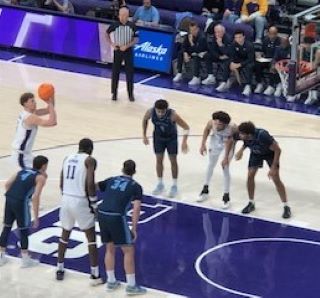
Seattle, WA – The San Diego Toreros left sunny Southern California for rainy Seattle to face the Washington Huskies in a non-conference battle last night. The Toreros were looking to improve their record to 6-6 before beginning West Coast Conference play next week.  Although 7-4 so far, the Huskies have been dealing with injuries and nursing a loss last Friday to cross-town rival, Seattle University.  Led by senior point guard, Brayden Maldonado, the Redhawks beat the Huskies for the second year in a row.  Maldonado is having an outstanding season under Coach Chris Victor.

The Toreros climbed out of a 7-0 deficit to take an 11-10 lead.  The Huskies responded with a three-pointer from the left corner. It was smooth sailing thereafter. The Huskies dominated points in the paint, points off turnovers, and points in transition.  Three-point shooting, ironically, since it sealed the victory early, was the only rough edge.  Washington was 5-of-21 from behind the arc. They’re now 6-of-36 in the last two games.  They’ll need to find their three-point range soon. The Huskies easily won 86-56 over the visiting Toreros.

Leading the Huskies was freshman Hannes Steinbach. In his ninth game as a Husky, the former German Bundesliga professional scored 21 points (6-13 FG, 1-3 3PT, 8-10 FT), and added 14 rebounds, one assist, three steals, and two blocks in 27 minutes. He also drew nine fouls while committing none. Steinbach has terrific instincts, footwork, and polish. He finishes through contact at the rim and creates his own shots off the low post-up. He’s a reliable roller. Steinbach shoots over 50% from three on low volume—approximately one attempt per game. He’ll become an even greater offensive threat as he continues to develop from long-range. Steinbach’s averaging 1.17 points per possession on a 67% true shooting percentage. He’s a great passer for a big man and takes care of the ball. His assist to turnover ratio sits at 1.27.

Steinbach anchors the Husky defense.  He disrupts shots in the paint and rotates effectively to help his teammates.  He’s not an elite mover laterally but uses his basketball intelligence and strength to position himself in the right spot and to contain quicker guards coming off ball screens. Steinbach’s an excellent rebounder averaging a dozen boards per game. He outlets the ball immediately to initiate the Washington’s transition offense and runs the floor on the break. Steinbach projects as a first round NBA draft pick.

Having only just arrived in the United States two weeks ago, Nikola Dzepina has already made an impression.  The Serbian, who most recently played for Valencia Basket in Spain, scored 7 points (2-7 FG, 1-5 3PT, 2-2 FT) and added 8 rebounds, 2 assists, and one block in 20 minutes. He’s a modern big who can stretch the floor with his perimeter shooting and physicality inside.  Keep an eye on him.

Adrian McIntyre and Juanse Gorosito chipped in 15 points apiece for San Diego. Notably absent from the starting lineup was Toneari Lane. The 6’5, 205-pound guard comes to San Diego as a graduate student after time spent at Winthrop and Georgia State. At Georgia State last year, he averaged 13.6 points, 2.8 rebounds, and 1.5 assists per game. His stats are down slightly through the first 11 games of this season but he’s more efficient (1.17 vs. 0.96 points per possession) and shooting better (62% vs 52% true shooting percentage).  Against Washington, the left-handed Lane knocked down a three-pointer from the right wing a few seconds after first entering the game at the 12-minute mark but didn’t get many touches the rest of the night. Lane finished with 5 points (2-4 FG, 1-2 3PT), two rebounds and one assist. He’s a high-motor guy who could fill a mid-market slot overseas.

Next up the Huskies play Utah at home before battling Indiana and Purdue on the road in Big10 action. Husky fans remain optimistic that the purple and gold can return March Madness to Montlake. Right now, bracketologists give the Dawgs a 1 in 3 chance of an at-large bid.

This article was written by Justin Pallari, a correspondent and scout for NetScouts Basketball. You can follow us on Instagram, or on twitter.

We are looking for those interested in our basketball scout apprenticeship program. For information contact us and forward your resume.

New York, NY – On Saturday night we had an exciting showdown at the mecca between two top 25 programs in No. 3 Duke and No. 19 Texas Tech and it would live up to the excitement. The first half of this matchup was pretty much dominance from the Blue Devils. Texas Tech started out strong going on a 9-0 run to open up the night, Duke would then go on to outscore them 46-27 from that point on giving them a 46-36 lead at the half. Although Duke had a balanced scoring in the half leading the way was projected top 3 draft pick Cameron Boozer who filled up the stat sheet with 10 points, 6 rebounds, and 5 assists. As for the Red Raiders the frontcourt duo of LeJuan Watts and JT Toppin combined for 24 of 36 of their team’s points. 

Coming out of the locker room Texas Tech needed some production out of their backcourt, specifically Christian Anderson who had a quiet first half with 4 points despite being the Red Raiders second leading scorer this season. Anderson would go on to deliver greatly in the second half scoring 23 of his 27 points going 8-of-10 from the field. It proved to be even more important considering Watts fouled out  half way through the second half in finishing with 20 points. The Blue Devils started the night hot from beyond the arc going 7-of-14 in the first half but they would go cold in the second.

Cameron Boozer continued to generate many quality looks for his teammates throughout the half but the shots wouldn’t fall as they did earlier in the game. The Red Raiders’ star duo of Toppin and Anderson would continue to take advantage of Duke’s missed opportunities from the perimeter and the charity stripe. That eventually led to a big 82-81 Tech win over Duke, handing the Blue Devils their first loss of the season and snapping their 11 game winning streak. 

This matchup gave the fans a show with some excellent individual performances from both teams. From the Blue Devils the obvious standout was Cameron Boozer who showed exactly why he’s in the discussion to be the potential number one pick in the upcoming NBA draft. He finished the night with 23 points, 8 rebounds, and 7 assists showcasing his talent on one of the biggest stages in college basketball. Boozer displayed high IQ and overall great feel for the game, making some impressive reads out of the post for quality shots for his teammates all night. He was also strong on the glass. His ability to use his strength to get box out position and grab rebounds despite not being an elite vertical athlete is stellar. His scoring came naturally tonight with his soft touch around the rim getting opportunities by sealing his man and scoring out of the post in addition to the offensive glass. 

As for the Red Raiders they got great games out of the trio of Christian Anderson, JT Toppin, and LeJuan Watts. Toppin and Watts dominated the game in a similar way by doing their work on the block with their back to the basket and scoring in the paint with tough shot making at the rim all night. Toppin also was a monster on the boards grabbing 10 rebounds against a highly regarded Duke frontcourt. However, despite all these big-time performances the player of this game was hands down Christian Anderson who had 27 points on 9-of-14 shooting with five made 3’s. Anderson’s shot making was nothing short of incredible; he was dynamic being able to score off the dribble out of the pick and roll and getting to pull up jumpers from range. He also showcased an in-between game getting into the teeth of the defense for short range shots and mid-range shots. Anderson’s ability to get clutch time buckets was the main key for the Red Raiders significant win over the Blue Devils.

This article was written by Jordan Amadeo, a correspondent and scout for NetScouts Basketball. You can follow us on Instagram, or on twitter.

We are looking for those interested in our basketball scout apprenticeship program. For information contact us and forward your resume.

Atlanta, GA – The CBS Sports Classic once again delivered a showcase of high-level college basketball, featuring two marquee matchups that lived up to the event’s reputation for drama and intensity. The atmosphere inside the arena was electric from start to finish, with fans from all four programs—Kentucky, St. John’s, North Carolina, and Ohio State—creating a vibrant, tournament-like environment in mid-December.

The day began with a statement performance from Kentucky, which stormed back in the second half to defeat St. John’s 78–66. The Wildcats, who had struggled with consistency early in the season, found their rhythm after halftime, outscoring the Red Storm 53–34 in a dominant final 20 minutes. It was a defining win for Kentucky, marking their most complete performance of the season and a potential turning point as conference play approaches.

Otega Oweh led the charge for the Wildcats, showcasing his athleticism and scoring touch with 20 points and 5 rebounds. His energy on both ends of the floor set the tone for Kentucky’s second-half surge. Guard Jaland Lowe added 13 points and 3 assists, providing steady playmaking and timely shot-making. The biggest storyline, however, was the debut of highly touted player Jayden Quaintance, who made an impact with 10 points and 8 rebounds. His presence in the paint gave Kentucky a new dimension, both defensively and on the glass.

Kentucky’s turnaround was fueled by improved ball movement and defensive intensity. After trailing at halftime, the Wildcats came out with renewed focus, pushing the pace and attacking the rim. Their depth and athleticism overwhelmed St. John’s, who struggled to match Kentucky’s energy in transition. The Wildcats’ 53-point second half was their most explosive offensive stretch of the season, a sign that their young roster is beginning to gel.

For St. John’s, the loss was a tough setback after a promising first half. Bryce Hopkins led the Red Storm with 13 points, showing his versatility as a scorer and rebounder. Zuby Ejiofor contributed 12 points and 5 rebounds, while Ian Jackson added 10 points and 6 rebounds in a solid all-around effort. Despite the defeat, St. John’s displayed flashes of potential, particularly in the first half when their ball movement and defensive pressure kept Kentucky off balance. However, the Red Storm couldn’t sustain that level of play once Kentucky’s offense caught fire.

The second game of the doubleheader between North Carolina and Ohio State was a thriller that went down to the wire, with the Tar Heels escaping with a 71–70 victory. The contest featured multiple lead changes and momentum swings, keeping the crowd on edge until the final buzzer.

Caleb Wilson was the star for North Carolina, delivering a dominant performance with 20 points and 15 rebounds. His ability to control the boards and score in key moments proved decisive. Henri Veesaar added 17 points and 10 rebounds, giving the Tar Heels a strong interior presence, while Seth Trimble chipped in 17 points and 3 assists, providing steady guard play and clutch shot-making down the stretch.

Ohio State battled valiantly throughout, led by Bruce Thornton’s 16 points, 4 rebounds, and 4 assists. Devin Royal was a force inside with 17 points and 8 rebounds, while Christoph Tilly contributed a double-double of his own with 12 points and 10 rebounds. The Buckeyes executed well offensively and defended with toughness, but a few late missed opportunities allowed North Carolina to hold on for the narrow win.

The CBS Sports Classic once again highlighted the depth and talent across college basketball’s elite programs. The event’s atmosphere was electric, with fans treated to two games that combined intensity, skill, and drama. Kentucky’s second-half explosion against St. John’s underscored their potential to be a dangerous team as the season progressed, while North Carolina’s resilience against a tough Ohio State squad reaffirmed their status as one of the nation’s top contenders.

As the team’s head into the heart of their schedules, the CBS Sports Classic served as both a measuring stick and a momentum builder. For Kentucky and North Carolina, the victories provided confidence and validation. For St. John’s and Ohio State, the lessons learned in defeat could prove valuable in the months ahead. In a day filled with energy, passion, and high-level basketball, the CBS Sports Classic once again delivered on its promise as one of the sport’s premier showcase events

This article was written by Andrew Keeling, a correspondent and scout for NetScouts Basketball. You can follow us on Instagram, or on twitter.

We are looking for those interested in our basketball scout apprenticeship program. For information contact us and forward your resume.

Miami Pulls Away from UL Monroe

by Carl Berman

Miami, FL – Miami handled UL Monroe 104–79 in a game that was never really about execution or schemes, but about physical dominance and pace. From the opening half, it was clear Miami could get whatever it wanted inside, even though the outside shooting didn’t show up early. At halftime, Miami led 49–38 despite shooting just 18% from three, while UL Monroe was actually the more efficient perimeter team, hitting 47% from deep and 54% overall. The difference was simple: Miami overwhelmed them on the glass and at the rim, owning a 24–9 rebounding advantage and consistently punishing Monroe’s lack of interior resistance.

Miami played man-to-man from the opening tip, though the defensive effort wasn’t sharp. Rotations were slow, closeouts were late, and the overall energy felt muted at times—possibly a factor of the early start time. Even so, UL Monroe couldn’t capitalize enough to stay close because Miami’s physical advantages kept showing up possession after possession. Malik Reneau set the tone early, dominating inside with 16 points and 6 rebounds in the first half alone, scoring comfortably through contact and establishing deep position whenever he wanted. Miami’s ability to score without relying on the three kept them in control despite the shooting variance.

The second half followed a similar script, but Miami began to separate once the ball movement improved and open looks started to fall. About ten minutes in, the Canes had created real distance, pushing the lead through rim pressure and transition opportunities rather than shot-making difficulty. Miami did experiment with zone looks again against a lower-level opponent, but once more it proved ineffective. UL Monroe trimmed the lead to 76–62 with ten minutes left by attacking gaps and knocking down shots against the zone, reinforcing the idea that Miami’s identity is far more stable when they stick to man coverage. Once Miami reasserted control through pace and physicality, the game was effectively over.

Tre Donaldson had arguably his best all-around game as a true point guard, finishing with 18 points, 11 assists, and 6 rebounds on efficient shooting. What stood out most was his control of tempo. Donaldson played like a floor general, consistently putting teammates in scoring positions and letting the game come to him. When his mindset stays pass-first, Miami’s offense flows cleaner, and his scoring naturally follows without forcing the issue. His veteran presence showed, especially during moments when UL Monroe threatened small runs.

Ernest Udeh Jr. was another decisive factor. With 14 points and 15 rebounds, his size and strength completely overwhelmed Monroe’s frontcourt. Udeh plays like an old-school center, anchoring the paint, cleaning the glass, and imposing physicality on both ends. While his offensive fundamentals still need refinement, his rebounding presence and ability to control space around the rim were unmatched in this game. Miami won the interior battle comfortably, and Udeh was a major reason why.

Reneau continued to look like Miami’s most reliable interior scorer with this 22-point,10-rebound game on 10-15 FG attempts. His efficiency, comfort playing through contact, and ability to convert consistently around the rim stood out again. Miami leaned on him whenever they needed stability offensively, and UL Monroe simply didn’t have an answer for his strength and touch. When Miami needed a basket to stop momentum, the ball found Reneau.

On the other side, Renars Sondors showed intriguing traits for UL Monroe finishing with 14 points on 5-11 FG. He has good size and length, plays with controlled pace, and brought an aggressive offensive mindset in this matchup. His body control stood out, especially when attacking the basket, and his effort defensively was noticeable. The main area for growth is speed; both in decision-making and overall pace, but the tools are there for him to be a productive forward at NCAA Power 5 level.

Ultimately, this game was decided by physicality, rebounding, and interior scoring. Miami shot 60% from the field for the game and dominated the paint through Reneau and Udeh, while Donaldson orchestrated efficiently from the guard spot. Defensively, Miami still has room to improve, especially in terms of effort and consistency, but against UL Monroe, talent and strength were more than enough. The result was a fast-paced, high-scoring win that highlighted Miami’s strengths while still exposing areas that need tightening as competition improves.

This article was written by Matias Deya, a correspondent and scout for NetScouts Basketball. You can follow us on Instagram, or on twitter.

We are looking for those interested in our basketball scout apprenticeship program. For information contact us and forward your resume.

St. John’s Rolls Past Iona

by Carl Berman

New York, NY – Heading into the matchup, St. John’s was looking to build momentum with a convincing performance before opening Big East play, and the Red Storm answered the call. Behind the hot shooting of Stanford transfer and three-point specialist Oziyah Sellers, who finished with a game-high 19 points, the Johnnies cruised to a dominant 91–64 victory over Iona. While Iona’s coaching staff had its team prepared and competitive early, it was no match for the adjustments made by Hall of Fame head coach Rick Pitino. After a lackadaisical first half, Pitino rallied his group on both ends of the floor, as St. John’s pulled away in the second half and turned a tight contest into a 27-point rout.

Sellers was brought in for his elite perimeter shooting, and the Johnnies will rely heavily on that skill if they hope to find consistent success this season. He offered a clear glimpse of his value in this one, finishing with 19 points in 31 minutes on an efficient 7-of-13 shooting performance, including 4-of-7 from beyond the arc. Beyond the numbers, the guard excels moving without the ball, consistently putting himself in position to get open. His feel for spacing and willingness to do the little things—often absent from the box score—make him a seamless fit within the offense.

Iona was once again led by senior Cincinnati transfer CJ Anthony, who provided a much-needed spark for the Gaels on both ends of the floor. The veteran guard poured in 20 points on 9-of-19 shooting, consistently putting pressure on the defense with his ability to attack the rim, absorb contact, and finish through traffic. Despite drawing significant physicality, Anthony did not earn a trip to the free-throw line, yet he continued to impose his will with his strength and downhill approach. On the defensive end, he showed no fear regardless of the matchup, competing possession by possession and holding his own against St. John’s perimeter players. Anthony’s physicality, confidence, and two-way effort should allow him to make a substantial impact for Iona as conference play approaches.

For the Johnnies to live up to their lofty expectations, they must address a glaring playmaking issue. The roster lacks a true point guard, a reality head coach Rick Pitino acknowledged this offseason when he noted that the position has become a lost art in college basketball. Early returns suggest that absence has been costly. Without a clear facilitator, St. John’s has struggled at times to fully capitalize on the intricate offensive sets Pitino installs. Still, with one of the greatest coaches in college basketball history at the helm, there is reason to believe the issue can be mitigated before Big East play begins. Without improved playmaking, however, questions remain about just how far this team can realistically advance in March.

Ultimately, St. John’s accomplished what it set out to do, delivering a convincing nonconference win that showcased both its upside and its areas for growth. The Red Storm’s shooting, defensive intensity, and coaching adjustments underscored the talent and ceiling of this roster, while individual performances like Oziyah Sellers’ efficient scoring highlighted how impactful the new pieces can be. At the same time, lingering playmaking concerns remain a storyline to monitor as Big East play approaches. If Rick Pitino can solve that puzzle, St. John’s has the tools to contend deep into the season. If not, the margin for error will narrow quickly once the competition stiffens.

This article was written by William Murphy, a correspondent and scout for NetScouts Basketball. You can follow us on Instagram, or on twitter.

We are looking for those interested in our basketball scout apprenticeship program. For information contact us and forward your resume.

Albuquerque, NM – The University of New Mexico extended its win streak to four with a commanding 98–71 victory over Santa Clara. The game opened with both teams struggling to gain momentum as defensive pressure on both sides created early turnovers. Once UNM settled in, the Lobos established control, using forced turnovers to generate transition layups and push the tempo. In the second half, Santa Clara made a brief run to tighten the score, but the Lobos responded immediately with a decisive 10 point lead fueled by active hands-on defense, sharp passing, and cohesive teamwork.

Deyton Albury delivered a breakout performance, scoring 22 points along with six assists, three steals, and a block, his first 20-point game as a Lobo. He dominated the pace of play with his ability to accelerate and decelerate on drives, read defensive rotations, and make quick decisions in traffic. His court vision opened up clean shots for his teammates, while his wingspan and defensive anticipation created early frustration for Santa Clara’s ball-handlers. His all-around impact made him the most influential player on the floor.

Tomislav Buljan added 16 points, 10 rebounds, and two blocks in an efficient and controlled performance. Rather than forcing difficult finishes, Buljan consistently converted high-percentage opportunities with strong footwork and positioning. His lone dunk came off a well-read steal, highlighting his awareness and timing on both ends of the court.

Off the bench, Uriah Tenette provided an offensive spark with 15 points, proving himself a reliable scoring option. While his defensive effort was strong, he will need to reduce hand usage to avoid unnecessary fouls and maximize his time on the floor. Depth continued to be a key strength for the Lobos, with multiple players contributing across scoring, rebounding, and defensive categories.

Santa Clara entered prepared, assigning their top defender, Christian Hammond, to chase UNM sharpshooter Jake Hall and limit his perimeter looks. The strategy was effective in reducing Hall’s scoring impact, but the Broncos were unable to capitalize offensively. Turnovers, missed shots, and foul trouble prevented them from maintaining pressure as the game progressed. Hammond led Santa Clara with 22 points on 60% effective field-goal shooting, but foul trouble limited how aggressively he could defend. Elijah Mahi added 13 points and led the Broncos with eight rebounds, while Allen Graves contributed 12 points, though he struggled to find consistency amid UNM’s high defensive energy.

Both Albury and Hammond showcased their dual-threat capabilities and stood out as key players for their respective teams. Ultimately, UNM’s depth, defensive discipline, and high-level ball movement dictated the game’s flow. Their ability to convert turnovers into fast-break points, execute sharp offensive sets, and maintain intensity for 40 minutes powered the 98–71 victory. With strong chemistry and growing confidence, the Lobos continue to establish themselves as a dynamic, well-balanced team with significant early-season momentum.

This article was written by Rebecca Lucero, a correspondent and scout for NetScouts Basketball. You can follow us on Instagram, or on twitter.

We are looking for those interested in our basketball scout apprenticeship program. For information contact us and forward your resume.

Miami, FL – Miami gets the win against Southern Miss 88–64, but the game didn’t start that way at all. Southern Miss came out with an 8–0 run, matching Miami physically and dictating the pace early. Miami answered with Malik Reneau hitting back-to-back threes to calm everything down and make it 8–6 about five minutes in. Miami tried switching into 3-2 and 1-3-1 zone looks after scoring possessions, but both teams were struggling to create shots. The first ten minutes felt like a grind, effort on both sides, but no real rhythm offensively.

Southern Miss stayed man-to-man the entire first half and that defensive approach, plus their physical play, gave Miami problems. Miami’s zone coverage was not working at all, players staying planted with too many gaps, Southern Miss was attacking those holes easily in the first half. Man-to-man was just simply the better option for this noon game, but Miami didn’t fully lean on it until later.

At halftime the game was tied at 34–34. Miami shot 36% FG, Southern Miss was better at 50%. The rebounding edge went to Southern Miss. They brought physical energy on both ends. Miami wasn’t efficient because they weren’t getting clean looks, Southern Mississippi’s length and effort made them real uncomfortable.

Five minutes into the second half Miami built a 3-point lead, still shooting under 40%, but the talent difference was obvious. Southern Miss defended well and played tough but Miami still controlled the margin. The real shift occurred when Miami completely ditched the zone, exactly what needed to happen. Once they locked into man-to-man, everything flipped. Miami went on a 32–17 run across the next ten minutes and took full command, 66–51.

From there Miami opened a 20-point lead. They went back to zone a bit once the game was basically wrapped. Their starting five showed they are the group Miami can rely on. Southern Miss went to their reserves with five minutes left.

A huge part of Miami’s second-half surge was the performance from freshman Timotej Malovec. It was a breakout game for him. He finished with 16 points on 5-of-11 FG and 4-of-10 from three. His fundamentals are raw, but the tools are obviously there, good feel, smooth mechanics, great arc on the jumper. He only had one drive all game, but that euro-step finish told me everything I needed about his touch and pacing. Once he adds strength to his frame, his game is going to open up. I asked him about his role and he kept it simple: he does what the coaches ask. That discipline is going to take him far.

Reneau was Miami’s tone-setter. 21 points in 18 minutes on 6-of-12 FG and 2-of-3 from deep. Every shot looked comfortable. He’s Miami’s best producer on both sides. When he’s locked in, he has one of the strongest physical/skill combos in college basketball. The only critique from today’s game is pace. He plays slow at times, maybe part of Miami’s offensive structure, but if he pushes to impact every possession, he can rise quickly on draft boards.

Shelton Henderson quietly had one of the most complete performances: 12 points on 4-of-5 FG, plus 4 rebounds, 4 assists, 3 steals, 1 block. His defense was huge, especially in Miami’s zone packages where he had the freedom to use his physicality on the wing. I asked him about sometimes appearing passive offensively and loved his answer; he lets the game come to him and executes what coaches ask. With how much information young players have to process in today’s NCAA systems, that mindset makes sense. Some draft boards don’t even have him top-60, which is hard for me to understand. The size, the frame, the defensive reliability, he can match an NBA wing physically on defense today. He has first-round type tools.

Southern Miss’s Isaac Taveras, a skilled 6 ‘6 junior, had an off night. The coaching staff said it plainly: they couldn’t handle Miami physically, and execution broke down.

In the end, Miami’s second-half shift to man-to-man and the talent advantage from their core group blew the game open. The starting five showed they can stabilize and take over once they lock into what works. The first half exposed the weaknesses of the zone, but the second half was a complete response; physicality, discipline, shot-making, with young players stepping into real roles. Miami figured the game out and dominated the exact moment they needed to.

This article was written by Matias Deya, a correspondent and scout for NetScouts Basketball. You can follow us on Instagram, or on twitter.

We are looking for those interested in our basketball scout apprenticeship program. For information contact us and forward your resume.

Towson, MD – Coming off of a close loss to James Madison, Towson had a week off to recoup and prepare itself against a good Cornell team. They struggled in the first half to stop Cornell from scoring in the paint. The Tigers saw themselves giving up 22 points in the paint while only being down 36-35 at the half. However, with a strong outing Tyler Tejada and Dylan Williamson, Towson was able to go on a run in the second half to secure the 93-80 victory.

In the first half, Senior Cooper Noard for the Cornell Big Red led the way with 10 points to help the team go on a 15-8 run to start the game. Towson had no answers for Cornell in the paint. Of their 36 points, 22 came in the paint as they shot 12-of-20 from inside the arc. It also helped that the team was efficient from 3 going 50% on 3-of-6 shooting led by the team’s leading scorer Adam Hinton who made both his 3’s in the half. The team also did a good job contesting shots in the paint. Out the gate, Towson was not able to convert inside the 3-point line going just 5-of-19 from the field. However, Tejada, currently leading the team in points at 18.6 ppg, led the team with 14 points at the break while the team collectively shot 7-of-14 from three. This 3-point shooting helped keep the game close for the Tigers along their strong offensive rebounding (9-3 advantage).

Following several shots in the paint by Tejada and offensive rebounds by Jack Doumbia Jr. that led to four points in a 30 second window, Towson seemed poised for a run. However, a few shots at the rim by Cornell kept the game close. After scoring just five points in the first half, PG Dylan Williamson stepped up in the second scoring 10 points and assisting on three shots to help Towson go on a 22-15 run. The Tigers were on a 17-15 run before a 3 by Tejada put them up 55-51 and then following a block, Tejada found Williamson on a fast break that led to a layup putting them up 57-51. This half also saw Tyler Coleman, who is averaging 2.6 ppg on the season with no 3’s, hit his lone 3 point attempt of the game and go 3-of-3 from the field. With 5:10 left to go, Towson converted a put back dunk off a missed shot followed by a steal and runout in transition led to a 16-point lead for the Tigers capping a 23-13 run essentially putting the game away.

The 93 points scored by Towson is the most points scored by the team with coach Pat Skerry at the helm against a non-conference opponent outside of the Baltimore area. The team also finished with 38 rebounds with almost half coming on the offensive end with 16. They made getting offensive rebounds their identity in the second half along with outside shooting as they finished the game 11-of-22 from deep. They were led by their two stars; Dylan Williamson who finished with 15 points, 2 rebounds and 8 assists, and Tyler Tejada who finished with 26 points, 8 rebounds and 3 assists. Towson will have a tough test ahead against 7-1 UCF.  Cornell looks to bounce back against 4-5 Samford.

This article was written by Andre Jackson, a correspondent and scout for NetScouts Basketball. You can follow us on Instagram, or on twitter.

We are looking for those interested in our basketball scout apprenticeship program. For information contact us and forward your resume.

Atlanta, GA – Mississippi State imposed its rhythm and physical play in an 85–73 road win over Georgia Tech on Wednesday night, relying on Josh Hubbard’s calm scoring bursts, Quincy Ballard’s inside presence, and timely outside shooting to control a game the Bulldogs led for the final 32 minutes. Georgia Tech’s early energy came primarily from Kowacie Reeves Jr., who scored a career-high 23 points on 8-of-20 shooting, including a strong 7-of-14 from three-point range. However, the rest of the Yellow Jackets shot just 18-of-57 from the field and 1-of-16 from deep, a disparity that defined the night.

Reeves opened the game with the smooth mechanics and balanced attacking he has shown all season, knocking down two early threes to help Georgia Tech take a 9–2 lead. His ability to shoot cleanly off movement, maintain consistent form, and make quick decisions off screens provided the Jackets with their most dependable source of offense. Mississippi State responded quickly. Hubbard’s composed ball handling, even as a streaky shooter, allowed the Bulldogs to settle into their preferred pace. He never rushed, skillfully navigating switches and pressure to guide Mississippi State through the early stretch.

The Bulldogs took their first lead at 15–13 during a run in which they scored 13 of the next 16 points, capitalizing on Georgia Tech’s cold spells and struggles finishing around the rim. Ballard’s long reach altered multiple shots, forcing the Jackets into difficult one-handed finishes — an area where Reeves, despite his scoring, can still be limited — and rushed floaters from his teammates. By the second media timeout, Mississippi State held a rebounding advantage and began controlling the paint, widening the margin as Georgia Tech’s efficiency sharply dropped.

Reeves continued to score through sharp cuts, relocations, and confident pull-up jumpers, but the Jackets struggled to find consistent help. Akai Fleming, who can pressure the rim with his strong frame, added 12 points but struggled as a perimeter shooter, allowing Mississippi State to sag and clog driving lanes. Baye Ndongo and Mouhamed Sylla each contributed 12, with Ndongo’s effort on the glass momentarily helping narrow the rebounding gap. Still, Tech never fully recovered from its long scoreless stretches.

Mississippi State entered halftime leading 37–28, buoyed by balanced contributions from Jayden Epps, Brandon Walker, and Jamarion Davis-Fleming. Their physical drives and timely cuts added needed scoring. Hubbard remained patient throughout, rarely forcing shots and maintaining control of the offense even when the Bulldogs weren’t shooting well from outside.

The Bulldogs opened the second half with a quick five points, increasing their lead to 16. Georgia Tech answered with its best stretch of the night — a 21–11 run sparked by Reeves’ continued perimeter accuracy and Ndongo’s hustle — trimming the deficit to 55–49 with 11 minutes remaining. For a moment, Tech’s energy, the crowd’s engagement, and Reeves’ shot-making created the sense that momentum might shift.

Hubbard quickly put that notion to rest. From the 55–49 mark, he scored nine straight points, showcasing the scoring ability that complements his steady floor leadership. He sank two threes and completed a three-point play to push the lead back to 66–51, and Georgia Tech never drew within single digits again.

Mississippi State maintained control of the paint, dominated the boards, and kept Georgia Tech’s non-Reeves shooters off balance. Hubbard finished with 25 points, while Epps, Walker, and Davis-Fleming each contributed in double figures. Ballard’s shot-blocking remained central, influencing Tech’s shot attempts far beyond the box score.

Georgia Tech, now 5–4, received 12 points each from Fleming, Ndongo, and Sylla, but their 1-of-16 shooting from deep outside of Reeves proved too great an obstacle to overcome. Despite Reeves’ strong performance and game-high nine rebounds, Tech’s offensive struggles and Mississippi State’s disciplined execution secured an 85–73 victory for the Bulldogs.

This article was written by Courtney Chappelle, a correspondent and scout for NetScouts Basketball. You can follow us on Instagram, or on twitter.

We are looking for those interested in our basketball scout apprenticeship program. For information contact us and forward your resume.
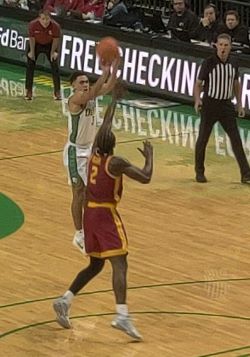
Eugene, OR – In the opening night of Big Ten conference play, USC had a huge first half from Jacob Cofie, a huge second half from Ezra Ausar, and a steady showing of dominance from Chad Baker-Mazara to edge out Oregon, 82-77. The game was close throughout, with Baker-Mazara sealing it down the stretch with several floaters in the lane, and a massive three-pointer he created off the bounce. USC maintains a perfect 8-0 record while missing junior guard Rodney Rice, who is averaging 20.3 ppg through 6 games. Oregon, after finishing 0-3 at the Players Era Festival in Las Vegas, is now at 4-4 on the season.

Auburn transfer and super senior, Baker-Mazara, was the game high scorer with 25-points, consistent in his impact during both halves. The lithe, 6’7” wing, showed good touch, unorthodox drives, and used his length to create space and angles. He’s also a strong defender and a steadying presence. Turning 26 in January and would be very light by NBA standards, he is averaging 20.9 ppg on the season, is a career 87.8% FT shooter and 39.5% 3PT shooter in college. He should at the very least be on two-way radars and have a chance to prove he can carve out a role in the G League.

The first half saw a dominant performance from sophomore Virginia transfer, Cofie, who took advantage of mismatches, drained a couple from long range and showed his ability to handle in the open floor at 6’10”. Cofie had 16 of his 17 points in the first half, as Oregon stifled him with doubles and kept a closer eye on him, which led to opportunities for the 6’9” senior Utah transfer, Ausar. After playing just over 5 minutes in the first half due to foul trouble, Ausar used his physicality and athleticism to finish around the basket and get to the foul line. He had all 13 of his points in the second half. Cofie also finished with 3 steals and 2 blocks, with he and Ausar able to move their feet and make it tough for Oregon to score in the paint.

The other two double figure scorers for the Trojans were freshman guard Jerry Easter II, and stretch forward Jaden Brownell, both finishing with 11. Easter II has taken on much more of a role the past two games without Rice, and he left a mark on this game with his ability to get to the paint and his defensive pressure. All three of his field goals were blow by’s, and he sealed the game for the Trojans at the FT stripe. Brownell, the 6’10” transfer from Samford, had three corner three-pointers, with his quick release being something you have to account for.

Oregon had a big performance from junior Kwame Evans, Jr., who tied a career high with 23 points and pulled down 9 rebounds. He showed a blend of his ability to stretch the floor, how dangerous he can be as a cutter, and that he can punish closeouts. He did a good job through contact and finished 9-of-11 at the line. Evans, Jr. also is an event creator defensively with his length and anticipation. This was his fifth game in a row over double figures, and the Ducks are a much better team when he is aggressive, taking advantage of mismatches with his blend of length and movement ability. While he still can work on his hands, reacting more quickly once he gets the ball, and his balance going to the basket, he was the absolute bright spot for Oregon and kept this game competitive.

After a rough start from deep for Oregon, senior Elon transfer Takai Simpkins is now hitting 40.9% 3PT on the season and was 4-of-6 from 3 in this game, finishing with 17 points and 5 assists. It has been a streaky season for Simpkins thus far, but he gives the Ducks a secondary creator, with some pop and someone defenses need to respect from deep. 

Junior Jackson Shelstad had 11 points and 4 assists in the first half, as the Ducks went into halftime tied 39-39. The second half was a real struggle, as he finished 0-4 from three, making his lone FG with the game out of reach to finish with 13 points and 5 assists. Also, in a game that saw Oregon shoot 10-of-23 (43%) from three, Shelstad finished 1-of-6. Teams have started to trap him consistently, pressuring him up court often and being physical off ball. The Ducks second leading scorer on the season at 15.3 ppg, Shelstad and Oregon will have to adapt to what is now common practice in trying to take him out of the game.

The Trojans were not the only team missing a crucial piece, as 7-footer Nathan Bittle missed his second game in a row dealing with an ankle injury. Bittle is averaging 16.3 ppg, 7.8 rpg, and 2.3 bpg on the season, and will be a crucial element if Oregon hopes to compete in the Big Ten. Rodney Rice, the junior Maryland transfer, missed his third game in a row as he deals with a shoulder injury.

Oregon and USC will both be in California on Saturday December 6, playing their second Big Ten conference games at 3 pm, with Oregon facing UCLA at Pauley Pavilion, while USC will host Washington. USC has done all they have needed to so far this season, while Oregon hopes to cut down on turnovers that have plagued them as a team, and get all of their main players on the same page. 

This article was written by Michael Visenberg, a correspondent and scout for NetScouts Basketball. You can follow us on Instagram, or on twitter.

We are looking for those interested in our basketball scout apprenticeship program. For information contact us and forward your resume.