Category:

News

Portland, OR – For the 16th year, the Nike Hoop Summit has come to Portland, Oregon, featuring some of the top American high school prospects against some of the best the world has to offer at 19 years of age or younger. It is a week-long event culminating in a Saturday game where players from Team USA take on the World Team. The practices are also quite important, as they are only open to certain personnel, plus show preparedness, coachability, and also feature a couple scrimmages of their own against a team made up of high school talent, known as the Portland Generals.

Both teams were loaded with players that have NBA intrigue, along with many who will be stars in the new landscape of college basketball. Prior viewing, along with practice, give a good idea of the value each player will bring to the table, and a good overview of what will get them minutes at the next level.

Team USA

Bruce Branch III | 6’7 195 lbs | BYU

The youngest player on Team USA, Branch III had a fairly quiet week with some flashes of intrigue with his combination of size, length, shooting ability. This was not a great setting to show his on-ball skills he had displayed with the Compton Magic or at his stops at Perry HS or Prolific Prep, but he bought in, covers a lot of ground with his plus wingspan, and shows good communication. His shooting, perimeter skills, and defense are what make him one of the top prospects in this upcoming class, while he still is developing physically and vying to become a more assertive type to cement his status near the top of the 2027 NBA Draft class. He still has a wayo go, but plenty of tools and talent to work with, even if he took more of a complementary role during the practices and scrimmage.

Christian Collins | 6’8 205 lbs | USC

Having just committed to USC, Collins had some great moments with St. John Bosco this past year, with solid physical tools, ability to put the ball on the floor, and overall energy. His shot has a slight hitch but is still a weapon and he knocked down several long range attempts in the Generals scrimmage. Shows an ability to pass off movement and is an active defender, though will still want to add to his frame. He lacks ideal size and strength at the four, while still ironing out the shooting consistency and ball skills under pressure to him at the wing. On production, he has been one of the top players in this HS Class, just some things to monitor closely during this upcoming season in terms of exactly how high he could go in the 2027 Draft.

Jason Crowe Jr. | 6’3 180 lbs | Missouri

Well known for his scoring prowess, Crowe Jr. is now the all-time leading scorer in the state of California, finishing his HS Career at Lynwood/Inglewood with 4,718 points, while averaging 43.6 points per game this season. The lefty is a three-level scorer and is the most consistent shooting threat on the team, while also able to get to the paint and having a mid-range game. Defensively, he plays with high intensity, having to press a ton during his HS career, though could use some discipline and strength. It will be the skills beyond scoring, which he will do plenty of next season at Missouri, that determine his ceiling as a Draft prospect. He took somewhat of a back seat during the Generals scrimmage, though coming off a MVP performance at the McDonald’s All-American game, would not doubt he comes into Saturday’s Hoop Summit game with high intensity. For Crowe Jr., it will likely be about finding balance in terms of his offense and the overall team offense, and it should be a fascinating journey to see that potential balance.

Caleb Gaskins | 6’8 225 lbs | Miami

Gaskins brings size and a sweet shooting stroke from mostly midrange. Playing with the Boozer twins on last year’s Chipotle winning Columbus HS, they finished as runner-up in The Throne, with Gaskins being productive during the HS season and other events. He is also one of the younger players in the class and has the ability to use his size to his advantage on both ends. At times his floating on the perimeter puts a dent into his efficiency, and it would be great if he was a higher volume long-range shooter, which could happen with the touch he has shown inside the arc. He had a strong scrimmage against the Portland Generals, with numerous dunks, shooting off the catch, and some makes in traffic. Should be an immediate contributor at Miami next season, with the efficiency and his ability to stretch out to distance being key factors in just how long he is there.

Caleb Holt | 6’5 205 lbs | Arizona

One of the most dependable prospects in this class with his ability to do a little bit of everything, scalability on the wing in terms of his on and off ball ability. Strong, focused, and though his shot needs a little work in terms of consistency and release time, it is a weapon. Brings intensity on defense and caused a world of issues for ball handlers during the Generals scrimmage, while shooting his footwork and decision making on offense. He is more towards the size of an average SG as opposed to a really “big guard”, and is not necessarily a high-end explosive player, with his understanding of himself, change of pace, and just how hard he plays being what make him a really enticing player among the top of the potential 2027 Draft Class.

Brandon McCoy, Jr. | 6’5 190 lbs | Michigan

The combination of explosive leaping ability and ground coverage make McCoy Jr. a major defensive presence and disruptor, while still giving him some offensive juice as well. His confidence in his shot noticeably improved, while there are still questions about his touch and low release. His energy is contagious, and during the Generals scrimmage, he put his impact all over the game. Not many do more in terms of event creation, with deflections, steals, and his penchant for blocking perimeter shots. He does occasionally gamble, though will many times make up for it with his ability to recover with his quickness and length. Excels in transition, got to the basket plenty, and while it is not a certainty that he will be the on-ball, playmaking force he was originally projected to be, McCoy Jr. has the length and tools that should make him somewhat scalable even with the questions with his shooting, at the very least allowing him to be a valuable wing presence for Michigan next season.

Deron Rippey Jr. | 6’2 180 lbs | Duke

For a school who had some noticeable issues in terms of their lead guards being able to break down defenses, that is something that Rippey Jr. should provide from the jump. He is an impressive vertical athlete, has top tier quickness, while also having ball skills and flashes of shooting versatility as well. The smallest guard on the team in terms of height and length, he does things teams love from their smaller players in terms of hounding players on defense, mirroring and overall effort. He sees the floor well, makes plays for himself and others, and can really float with his vertical athleticism. Duke has not had a point guard like Rippey for quite a while, and he should make life a lot easier for his teammates next season.

Jordan Smith Jr. | 6’2 200 lbs | Arkansas

Smith Jr. has been sweeping just about every HS player of the year award after another strong season at Paul VI, that saw them win City of Palms, make the Chipotle Nationals, and finish the season 33-3. While he may be the shortest player on the team, his massive wingspan differential puts him in the dimensions of Donovan Mitchell, with Smith Jr. saying he gets Jrue Holiday and even Kawhi Leonard comparisons with his impact on the game. Simply put, he plays well beyond his size, affects the game a ton defensively while being able to get to the basket and out physical opposing guards. He was the leading scorer in the scrimmage against the Generals and was a force on defense both on and off the ball. His shot from midrange has improved, and the major question is just how consistent he is from long-range. He has become the real leader and alpha in this Class to this point, and he should have a huge year at Arkansas, and if his shot shows some level of consistency, John Calipari will have another high pick to add to his list of alumni.

Tyran Stokes | 6’7 245 lbs | Undecided

Throughout his prep career and before, Stokes seems to consistently have an imprint on whatever game he plays in. On-ball consistently this season with Rainier Beach, he fits into more of an off-ball role, and gets plenty of rebounds, shows a good passing eye, has an ability to put the ball on the floor and his three-point volume and confidence in HS this season was high. With this being said, the thing he still seems to be best at is his ability to use his overwhelming strength and athleticism as a downhill driver, cutter, and his confidence in his shot does not necessarily match its consistency right now. Also, he is known at times for having on-court outbursts, which he did at times during the week. Stokes was effective in the Generals scrimmage, while also showing the same warning signs that make you wonder if he really knows himself as a player and what can make him into a truly efficient force. Kentucky, Kansas, and Oregon have been in his list of possible destinations, with Vanderbilt and Washington both making late pushes. Kentucky seems to be the betting favorite right now, and they will get a tantalizing talent, with some things to work on in terms of holding onto the top spot he has claimed for a majority of his time in HS.

Ethan Taylor | 7’0 245 lbs | Michigan St.

With the World always having some big bodies, Team USA brought in a 7-footer of their own in Taylor. He moves well, is a lob threat, and affects shots around the basket while being difficult to back down. On a Link Academy team loaded with DI talent, Taylor often took a backseat, which he also did with MoKan in the EYBL. He is enticing due to having NBA Center size, already being quite strong, and effects the game off those two things alone. Tom Izzo’s ability to develop big men should bode well for him and hopefully will continue to focus on creating a presence around the basket on both sides of the floor.

Cameron Williams | 6’11 205 lbs | Duke

The big thing that stands about Cam Williams is his ability to punish smaller opponents with his high release point and shooting touch. He can hit tough shots, stretch out to the NBA line, and his movement skills at 6’11 are impressive. He also affects shots, has decent timing as a shot blocker, and can move laterally to stifle drivers. The big issues with Williams are his lack of strength and if a defender gets into his area, it really can knock him off balance. In the scrimmage and in practice, Williams rarely dribbled, which might be a lot of what we see next season at Duke as well. Will be an incredibly different look at the 4 spot and while he should be able to stretch and has the athleticism and size to finish above the rim, his core strength will be a significant factor into how high he gets picked in the NBA draft.

Elijah Williams | 6’6 200 lbs | Baylor

The lowest ranked player on the team in terms of his 247 Composite ranking, Williams had a solid week showing some ability to shoot along with some nice finishes and athleticism that should at the very least make him a rotation player at Baylor right off the bat. He has been going through the Team USA system throughout his HS career and showed the professionalism and understanding one might expect from the son of former NBA player and coach, Monty Williams. He was solid, though unspectacular in the scrimmage, but is another player that coaches can trust to play in the system, give effort defensively, and stretch the floor. Everything with Williams just needs to get a tad more consistent, from his shot, to his finishing, to his decision making. This week still showed that he has talent and size that makes him worth keeping an eye on through his time in college.

World Team

Ikenna Alozie, Nigeria | 6’1 190 lbs | Houston

His second year on the team, he plays well beyond his height with his length, reach, vertical athleticism. He’s a really strong rebounding guard, plus breaks up plenty of passes, and makes nice reads off the bounce. His outside shooting is still streaky and he is not necessarily a lead guard, as he doesn’t seem to have a high level of comfort running the offense. Much better playing off someone else, even with his willingness as a passer. His strong athleticism, and overall energy should bode well with Houston’s system. Will really be about ironing out the things professional teams want to see in a guard Alozie’s size that determines how quickly he makes the jump to the professional ranks.

Tajh Ariza, Japan | 6’9 200 lbs | Oregon

Another Hoop Summit returnee, after a year at Link Academy Ariza showed a bit more assertiveness as a cutter, and in terms of using his size and movement skills beyond the defensive end. He moves well, covers plenty of ground and creates events as a defender, doing so last year in the Hoop Summit game which saw the World take USA to overtime. Even with his noticeable improvement, he has a way to go in terms of creating for himself, long-range shooting consistency, and it will be a must for him to add strength. He should be someone Oregon can at least play to provide defensive versatility and give  off ball movement, along with the size to take advantage of mismatches on the wing.

Adam Atamna, France | 6’5 195 lbs | ASVEL

One of the most consistent performers during the week, he showed a level of professionalism and an ability to read the floor that should make him a crucial piece to how the World performs during the game. Playing for ASVEL, he saw quite a bit more success during the LNB Elite as opposed to EuroLeague competition, which is also possibly something to monitor during the game. During the week he shot it consistently, was a more than competent initiator, and was a great leader by example who showed competitive fire. Creates separation off the bounce, shows quick decision-making ability, and communicates on defense. He is not particularly long and had only an 8’4 standing reach, putting him below an average SG. Still, there were some that saw him as a potential lead guard down the line, and it looks likely he goes back to ASVEL and gets buzz in 2027 after he had a really nice Hoop Summit week.

Arafan Diane, Guinea | 7’0 305 lbs | Houston

Known for his massive size which allows him to carve out space in the paint, he also has soft hands and touch out to midrange, having several strong seasons with Iowa United. Diane is a rare big in terms of his ability to actually punish defenders on post-ups, and also has a soft touch out to midrange. He is good on the glass at both ends, is a drop coverage rim protector, and even shows some ability to pass out of the post. One thing that will need work is his conditioning, and while he moves fairly well for a player of his size, dropping some weight is a must. There were questions about him at the McDonald’s All-American practices and game, along with this week at Hoop Summit, about his intensity in practice and ability to get up to speed with his high-level contemporaries. His size, touch, and ability to maintain positioning should have him getting time for the Cougars, it will be his time with Alan Bishop and the training staff that will determine his overall impact. He unfortunately sustained an injury in practice on April 9 that will keep him out for a sustained amount of time, including the Hoop Summit game.

Sinan Huan, China | 7’1 230 lbs | Purdue

Everyone knows that Matt Painter loves his 7-footers, and Huan measured as the tallest player on the team, while also having a 7’5.5 wingspan. It was a solid week of practice for him, as he made noise around the basket, rebounded on both ends, and ran the floor hard. He still needs to work on maintaining positioning, and at times takes too long to make decisions, which leads to opponents closing in on him, forcing turnovers. Seems to know who he is, what he does well, and plays within himself. Draws fouls, gets offensive boards, affects shots, he’s not necessarily a starter off the bat in college, though will still likely get some time and be a fan favorite with his tools and effort.

Ethan Mgbako, Haiti | 6’5 195 lbs | Vanderbilt

Mgbako has a strong frame on the wing, is a long-range threat and shows ability to score in a few different ways with his ability to carve out space. The younger brother of two-time Hoop Summit participant, Mackenzie Mgbako, he’s smaller, though has some of the same qualities as a scoring threat, having led the EYBL in scoring in a few sessions. He did well playing off either Sadler or Atamna in World practice scrimmages, however was quiet in the scrimmage with the Portland Generals. A last-minute addition with Maximo Adams having to drop out of the game, Mgbako seems like a solid addition at the wing for Vanderbilt who brings scoring chops, strength as a perimeter defender, and an animated personality.

Lucas Morillo, Dominican Republic | 6’6 210 lbs | Illinois

His combination of size and feel on the wing have made him a fan favorite of those that went to Hoop Summit practices this week. His shot was inconsistent during the week, still Morillo has confidence and it looks like it will be a weapon. The most interesting part of his game is his ability to stop and start, his quick decision making, and his overall versatility. Currently ranked in the Top 60 nationally, he looks like another solid piece for Brad Underwood at the wing, with a nose for the ball, and potential as a shoot, pass, dribble player.

Miikka Muurinen, Finland | 7’0 225 lbs | Undecided

He is tall, has center physical measurements beyond weight, moves well, and his shooting mechanics look pristine. Had a number of moments during the week that showed the talent that made him one of the top ranked players in the 2026 HS Class before going to Partizan Belgrade. Even so, he can use work on his shot selection, and seemed quite easy to knock over or move him off of his position. The major concern with Muurinen is how he has affected those that have been around him, whether it be at Sunrise Christian, Bradley Beal Elite, Arizona Compass Prep, and this past year with Partizan Belgrade. Everyone seems to have stories of times he was difficult to deal with, and he did not dispel them during this week. The talent is tantalizing and it seems like he wants to go to college next season as opposed to entering the Draft, but whoever takes him on, they will need a plan for adding strength and his overall maturity.

Babatunde Oladotun, Nigeria | 6’10 200 lbs | Maryland

The youngest player on the World Team and in the game, Baba only played in a few high school games for Blake HS in Maryland while dealing with injury. He had a good summer with Team Durant playing up and did well at summer events which led to his decision to reclassify, much like Bruce Branch III. Having gone through a number of Team USA events as well, he consistently looked like the most intriguing prospect on the World Team. He tends to fade on his jumper, though that helps him hit tough shots and shoot over opponents. His decision making and strength both could use work, but both showed marked improvement here. Had a number of standout plays in the scrimmages in practice and the Generals match-up. He can score in a few different ways, stretch the court, and the ball skills at his size along with his ability to cover ground on defense really stand out among this current class. Work to be done, however this week was a strong step in the right direction.

Paul Osaruyi, Canada | 6’10 225 lbs | Undecided

Still a 2027 prospect, Osaruyi is incredibly explosive for his size, clearing the Vertec entirely at Basketball Without Borders from 12’0+ touch point. He replaced Malian/Spanish prospect, Sayon Keita, for a late spot on the World Team, and flashed his inside, outside ability in practice during shooting drills. When it came to scrimmages, he seemed to sometimes hold onto the ball too long and take a split second longer than you would hope to make decisions. Also, his perimeter game is much more hypothetical than practical at this point. The physical tools and athleticism with Osaruyi have always been high level, and he is a good rebounder, who can effect things on defense. It will be about his ability to refine his skill work, become more comfortable as a shooter and passer, improve his awareness as a defender to keep his spot near the top of his current HS Class. His year at Bella Vista Prep was a positive, this week still showed he has a way to go to get to the point you would hope given his raw talent.

Miles Sadler, Canada | 6’0 170 lbs | West Virginia

He is likely not actually the height they have him listed at, just also know he was flat out one of the best high school players in the nation this past year. The unquestioned leader of the EYBL/Chipotle Nationals winning CIA Bella Vista, Sadler is quick, crafty, can run an offense and create for himself as well. He was quieter in the Generals scrimmage than one would have thought while still being a set-up man with ability to breakdown a defense and get by a press. He has the leadership qualities and the tools you would want in a small guard, getting to the paint, shooting, and pressuring the ball on defense. He has quick hands, and a toughness that should make him a beloved fixture of West Virginia next season.

Abdou Toure, Guinea | 6’6 205 lbs | Arkansas

The most explosive player on the World Team, Toure showed a lot of flashes while at times fading a bit into the background. He showed a good attitude, coachability, and effort defensively. His shooting still is a work in progress, though a part of his tool belt, along with his vertical athleticism which lead to above the rim finishing, foul drawing and a need to keep an eye on him as a cutter. He should work really well with the high level athletes Arkansas is bringing in with both Jordan Smith Jr. and JJ Andrews. He still needs  to work on his handlingand decision making, however Toure showed that he should be able to hang with Team USA as an athlete, and displayed a professionalism that you would hope for.

Portland Generals

The scrimmage team, the Portland Generals were coached by Matt Jones, and had several players to keep an eye on. Here is a brief summary of what to watch with Generals players

Beckham Black, 2027/Undecided: best player on the floor during World scrimmage, pace, ability to pass off the live dribble, floater game along with shooting versatility

Aliou Dioum, 2026/West Virginia: agility at his size and ability to get low, bend on defense, has some ball skills and knocked down a few from long range against USA

Vaughn Karvala, 2026/Indiana: knock down shooter, ability to shoot off movement, shows ball skills and solid size on the wing at the college level

Amadou Seini, 2026/Undecided: size, ability to run the floor, finish above the rim, get rebounds, and cover in drop, quiet against World, put a mark on the game against USA

Lucas Toukam, 2026/Northern Arizona: rim running, ability to get the ball around the hoop, big energy player who scored in double figures in both scrimmages.

This article was written by Michael Visenberg of NetScouts Basketball. You can follow Mike on X @NBADraftMikeyV

Indianapolis, IN – The 2026 NCAA Men’s Basketball Tournament came to a thrilling conclusion at Lucas Oil Stadium in Indianapolis, where the Michigan Wolverines outlasted the Connecticut Huskies 69–63 to claim their first national championship in over three decades. In a game that lived up to its billing, both teams traded blows for 40 minutes, but Michigan’s poise  and timely execution down the stretch proved to be the difference.

Junior guard Elliot Cadeau once again rose to the occasion, leading the Wolverines with 19 points and orchestrating the offense with the composure of a seasoned veteran. Cadeau’s ability to control tempo and make plays in key moments was instrumental in keeping UConn’s defense off balance. His leadership throughout the tournament had been a defining factor in Michigan’s run, and on the biggest stage, he delivered once more. Forward Morez Johnson provided the interior presence Michigan needed, recording a double-double with 12 points and 10 rebounds. His physicality on the boards and defensive effort against UConn’s frontcourt helped the Wolverines withstand several second-half surges. Meanwhile, Yaxel Lendeborg, the team’s All-American forward, battled through ankle and knee injuries to contribute 13 points. Though not at full strength, Lendeborg’s toughness and ability to hit mid-range shots gave Michigan a crucial offensive boost.

For UConn, the loss ended their bid for a historic third national title in four years — a feat not accomplished since John Wooden’s UCLA dynasty of the 1970s. The Huskies entered the game with a chance to cement their place among college basketball’s modern powerhouses, but Michigan’s defensive discipline and rebounding edge proved too much to overcome. Alex Karaban led the Huskies with 17 points and 11 rebounds, showcasing his versatility and effort on both ends of the floor. Tarris Reed added 13 points and 14 rebounds, anchoring UConn’s interior attack and keeping them within striking distance throughout the contest. Braylon Mullins, who had been one of UConn’s most reliable perimeter threats all season, struggled to find his rhythm, finishing with 11 points on 4-of-17 shooting.

The game itself was a showcase of high-level basketball — physical, tactical, and filled with momentum swings. Neither team led by more than eight points at any stage, and the intensity never wavered. Michigan’s defense, which had been a hallmark of its tournament run, held UConn to just 39% shooting from the field and limited their transition opportunities. In the final minutes, Cadeau’s steady hand guided Michigan through the pressure. With the Wolverines clinging to a narrow lead, he hit a crucial pull-up jumper with just over a minute remaining, extending the margin to five. UConn had chances to respond, but Michigan’s defense forced contested shots and secured key rebounds.

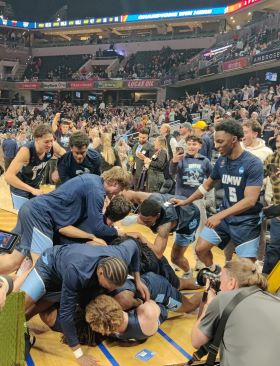
When the final buzzer sounded, the Wolverines bench erupted, celebrating a long-awaited return to college basketball’s summit. The victory also marked a significant moment for the Big Ten Conference, which had endured a national title drought since Michigan State’s championship in 2000. For years, the league had produced strong team’s and deep tournament runs but had fallen short. Michigan’s triumph not only ended that streak but also reaffirmed the program’s place among the sport’s elite. As confetti rained down inside Lucas Oil Stadium,  coaches and players embraced, knowing they had etched their names into Michigan basketball history. The Wolverines’ blend of veteran leadership, defensive toughness, and unselfish play carried them through one of the most competitive tournaments in recent memory. For UConn, the loss was a bitter end to another remarkable season, but their sustained excellence over the past four years remains undeniable. For Michigan, it was a night of redemption and resilience,  

This article was written by Andrew Keeling of NetScouts Basketball. You can follow us on Instagram, or on twitter.

We are looking for those interested in our basketball scout apprenticeship program. For information contact us and forward your resume.

Indianapolis, IN – Indianapolis was the epicenter of college basketball excitement as Gainbridge Fieldhouse hosted a tripleheader of championship action — the NCAA Division II and III National Championship Games, followed by the NIT title game. Fans were treated to a marathon of emotion, intensity, and unforgettable performances that showcased the very best of college basketball. 

Division II National Championship: Gannon 84, Lander 61 

The day began with a statement victory from Gannon University, who captured their first-ever national title in commanding fashion, defeating Lander University 84–61. Sophomore guard Pace Prosser was the star of the show, delivering a dominant 28-point, 11-rebound performance that set the tone early. His energy and shot-making ability were unmatched, as he controlled the game from start to finish. Sekasi Lucas added 13 points and 6 rebounds, while Morgan Mackenzie and Morgan Lucas chipped in 12 and 11 points respectively, giving Gannon a balanced offensive attack. The Golden Knights’ defense was equally impressive, holding Lander to just 38% shooting from the field. 

For Lander, Dylan Canoville fought hard with 14 points and 10 rebounds, showing grit in the paint. Jacob Daniels added 11 points, and Greyson Pritzi contributed 6 rebounds, but the Bearcats couldn’t keep pace with Gannon’s relentless tempo. The win marked a historic moment for Gannon, as they lifted their first national championship trophy in program history. 

Division III National Championship: Mary Washington 75, Emory 73 

The second game of the day delivered pure March Madness drama. Mary Washington edged Emory University 75–73 on a buzzer-beater that sent their fans into a frenzy. The game was a back-and-forth battle, with neither team leading by more than six points in the second half. 

Kye Robinson was sensational, scoring 27 points and grabbing 8 rebounds while hitting clutch shots down the stretch. Jay Randall added 14 points, and Kaden Bates recorded a double-double with 10 points and 10 rebounds, anchoring the Eagles on both ends. 

Emory’s Jair Knight and Ethan Fauss each scored 24 points, with Fauss connecting on six three-pointers to keep Emory within striking distance. Mario Awasum was a force on the glass, pulling down 19 rebounds to go with 9 points. However, Mary Washington’s defense was the difference, holding Emory’s leading scorer Ben Pearce to just 10 points on 1-for-8 shooting.

The game ended on a put-back of a Kye Robinson shot at the buzzer by Colin Mitchell. The victory gave Mary Washington a storybook ending to their season and a national title to remember. 

NIT Championship: Auburn 92, Tulsa 86 (OT) 

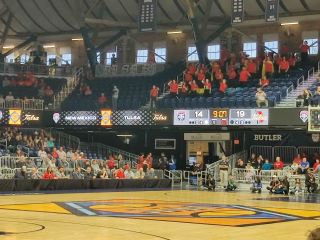
The nightcap was a thriller that capped off an unforgettable day. Auburn claimed the NIT Championship in overtime, outlasting a resilient Tulsa team that refused to quit. The Tigers built a commanding 21-point lead in the first half, only to see Tulsa storm back with a furious rally. Tulsa had a 3-point lead in the final seconds but couldn’t inbound the ball in time. Auburn cashed in with a Kevin Overton three-pointer to send the game into overtime. It was another situation where a team lost a game due to being unable to inbound the ball. 

In the end, Auburn’s depth and poise prevailed. Overton led the way with a spectacular 26-point performance, knocking down five three-pointers and delivering clutch baskets when his team needed them most. Tahaad Pettiford orchestrated the offense beautifully, finishing with 24 points and 8 assists, controlling the tempo in overtime. Keyshawn Hall was a force inside, recording a double-double with 11 points and 12 rebounds, while Elijah Freeman dominated the glass with 14 rebounds, giving Auburn crucial second-chance opportunities. Off the bench, Sebastian Williams-Adams provided a huge spark, scoring 13 points and bringing energy on both ends of the floor. 

Tulsa’s comeback effort was led by David Green, who poured in 25 points and grabbed 6 rebounds, showing tremendous leadership. However, Green shot only 1-of-7 on 3’s. Tyler Riley added 20 points, hitting big shots during the rally that brought the Golden Hurricane back into contention, while Ade Popoola chipped in 13 points with timely buckets in the second half. 

Despite Tulsa’s valiant effort, Auburn’s composure in overtime sealed the deal. The Tigers executed down the stretch, hitting free throws and making key defensive stops to secure the 89–84 victory. The win capped off a strong postseason run for Auburn, who showcased their resilience, depth, and championship mentality. 

From the opening tip of the Division II final to the final buzzer of the NIT overtime thriller, Gainbridge Fieldhouse delivered a day of basketball that fans will remember for years. Three championships, three unforgettable stories, and one incredible stage — Indianapolis once again proved why it’s one of the great basketball cities in America 

This article was written by Andrew Keeling and Carl Berman of NetScouts Basketball. You can follow us on Instagram, or on twitter.

We are looking for those interested in our basketball scout apprenticeship program. For information contact us and forward your resume.

Indianapolis, IN – The Final Four of the NCAA Tournament at Lucas Oil Stadium delivered everything college basketball fans could hope for — intensity, star performances, and the promise of a heavyweight National Championship matchup. UConn and Michigan emerged victorious, each showcasing the balance, depth, and poise that define championship-caliber teams.

In the opener UConn’s pursuit of another national title continued with a hard-fought 71–62 win over Illinois. The Huskies, appearing in their third Final Four in four years, once again demonstrated why they’ve become the standard of consistency in college basketball. From the opening tip, UConn dictated the tempo, using its size and defensive discipline to limit Illinois’ transition opportunities. Tarris Reed Jr. was the anchor for the Huskies, delivering a commanding performance inside with 17 points and 11 rebounds. His presence on both ends of the floor set the tone, as he controlled the glass and provided timely scoring in the paint. Braylon Mullins, the sharpshooting guard, gave UConn a crucial perimeter boost, knocking down four three-pointers and finishing with 15 points. His ability to stretch the floor opened driving lanes for teammates and forced Illinois to adjust defensively. Solo Ball added 13 points, attacking the rim with confidence and providing steady playmaking throughout the game.

Despite UConn’s control, Illinois refused to fold. The Illini, led by freshman sensation Keaton Wagler, battled back multiple times to keep the game within reach. Wagler showcased his versatility and composure, scoring a team-high 20 points while grabbing 8 rebounds. His ability to create his own shot against UConn’s tough defense was impressive for a first-year player on such a big stage. Tomislav Ivisic added 16 points and 7 rebounds, using his size and touch around the basket to challenge UConn’s frontcourt. Andrej Stojakovic contributed 9 points and 8 rebounds, providing hustle plays and defensive effort that kept Illinois competitive. UConn’s defense, however, proved to be the difference. The Huskies held Illinois to under 40% shooting and limited the Ilini to only three assists in the game. They also forced key turnovers late in the second half. Every time Illinois threatened to close the gap, UConn responded with timely baskets or defensive stops. The Huskies’ experience in high-pressure moments showed, as they maintained composure and executed down the stretch. The win sends UConn back to the National Championship game for the third time in four years — a remarkable feat that underscores the program’s sustained excellence.

The second semifinal featured a surprising but emphatic result, as Michigan dominated Arizona 91–73 to earn its spot in the title game. From the opening minutes, the Wolverines played with confidence and precision, jumping out to an early lead and never relinquishing control. Aday Mara was the star of the night, delivering a near-perfect performance with 26 points and 9 rebounds. The 7-foot center was unstoppable in the paint, finishing through contact and controlling the boards. His footwork and touch around the rim gave Arizona’s defense fits all game long. Point guard Elliot Cadeau orchestrated the offense masterfully, finishing with 13 points and 10 assists. His court vision and pace kept Michigan’s offense flowing, and his ability to push the tempo created easy scoring opportunities in transition. All-American forward Yaxel Lendeborg, limited to 15 minutes due to an ankle injury, added 11 points, providing energy and defensive versatility that helped Michigan maintain its edge. Michigan’s offensive execution was nearly flawless. The Wolverines shot efficiently from the field, shared the ball unselfishly, and punished Arizona for every defensive lapse. Their spacing and ball movement created open looks, and their bench contributed valuable minutes to sustain the momentum.

For Arizona, the loss was a disappointing end to an otherwise strong season. Koa Peat led the Wildcats with 16 points and 11 rebounds but shot only 6-of-18 from the field. Brayden Burries and Jaden Bradley each scored 13 points, trying to keep Arizona within striking distance but Burries was an inefficient 4-of-16 from the field. Tobe Awaka added 8 points and 9 rebounds.

However, Arizona struggled to contain Michigan’s interior attack and couldn’t match the Wolverines’ pace. Michigan’s defense also deserves credit. The Wolverines limited Arizona’s perimeter shooting and forced them into contested mid-range attempts. Their ability to switch defensively and protect the rim disrupted Arizona’s rhythm, allowing Michigan to control the game from start to finish.

**Looking Ahead: UConn vs. Michigan – The National Championship**

The stage is now set for a thrilling National Championship matchup between UConn and Michigan — two programs with rich histories and elite talent. UConn brings experience, balance, and championship pedigree, while Michigan arrives with momentum and confidence after dismantling Arizona. The battle inside between Tarris Reed Jr. and Aday Mara promises to be a focal point, as both big men have been dominant throughout the tournament. The perimeter play — Mullins and Ball for UConn, Cadeau and Lendeborg for Michigan — will likely determine the tempo and flow of the game. With both teams peaking at the right time, the championship clash at Lucas Oil Stadium has all the makings of a classic — a fitting conclusion to a memorable college basketball season.

This article was written by Andrew Keeling, a correspondent and scout for NetScouts Basketball. You can follow us on Instagram, or on twitter.

We are looking for those interested in our basketball scout apprenticeship program. For information contact us and forward your resume.

Indianapolis, IN – The storied Hinkle Fieldhouse in Indianapolis provided the perfect stage for an exciting night of college basketball as the National Invitation Tournament semifinals delivered two competitive matchups. Tulsa and Auburn emerged victorious, setting up a compelling championship showdown at Gainbridge Fieldhouse on Sunday night. Both teams displayed grit, balance, and timely execution to earn their spots in the title game. 

Tulsa Edges New Mexico 74–69

The first semifinal featured a clash between Tulsa and New Mexico, two programs eager to cap their seasons with a postseason title. Tulsa, under the guidance of head coach Eric Konkol, executed a disciplined game plan to outlast the Lobos 74–69 in a contest that remained tight from start to finish. 

Tulsa’s balanced scoring attack proved to be the difference. Ade Popoola led the Golden Hurricane with 12 points and 6 rebounds, providing energy on both ends of the floor. Senior forward David Green delivered a steady performance with 13 points and 5 rebounds, using his experience to make key plays down the stretch. Miles Barnstable added 11 points, knocking down three crucial three-pointers that helped Tulsa maintain momentum whenever New Mexico threatened to rally. 

The Golden Hurricane’s defense also played a pivotal role, forcing New Mexico into tough shots and limiting their transition opportunities. Despite the Lobos’ efforts to push the pace, Tulsa’s composure and half-court execution allowed them to control the tempo late in the game. 

For New Mexico, freshman standout Jake Hall continued to show flashes of brilliance despite a difficult shooting night. Hall led all scorers with 20 points, attacking the rim relentlessly and keeping the Lobos within striking distance. Center JT Rock contributed 14 points and 6 rebounds, providing an interior presence that challenged Tulsa’s frontcourt. However, New Mexico’s inability to convert open looks in the final minutes proved costly, as Tulsa’s poise at the free-throw line sealed the victory. 

The win marked a significant moment for Tulsa, which has steadily improved throughout the season. Their ability to share the ball and rely on multiple contributors has made them a dangerous postseason team. With the victory, the Golden Hurricane advanced to their first NIT championship appearance in over a decade, setting up a matchup with a surging Auburn squad. 

Auburn Dominates Illinois State 88–66 to Punch Ticket to the Finals 

In the second semifinal, Auburn showcased its athleticism and offensive firepower in an 88–66 win over Illinois State. The Tigers, who endured an up-and-down regular season, appear to be peaking at the right time under head coach Steven Pearl. Their performance at Hinkle Fieldhouse was a statement of intent heading into the championship game. 

Keyshawn Hall led the way for Auburn with a commanding 24-point performance, attacking the basket with confidence and finishing through contact. His ability to create his own shot and draw fouls kept Illinois State’s defense on its heels. Kevin Overton provided a major spark from beyond the arc, hitting five three-pointers in scoring 16 points. His perimeter shooting stretched the Redbirds’ defense and opened driving lanes for his teammates. Guard Tahaad Pettiford added 12 points and 5 assists, orchestrating the offense with poise and precision. Auburn’s depth and defensive intensity overwhelmed Illinois State, forcing turnovers and converting them into transition points. The Tigers’ bench also contributed valuable minutes, maintaining energy and pressure throughout the game. 

Illinois State, despite the loss, showed resilience and flashes of offensive rhythm. Ty’Reek Coleman led the Redbirds with 17 points, displaying confidence as a freshman guard on a big stage. Chase Walker added 13 points and 7 rebounds, battling inside against Auburn’s athletic frontcourt. Ty Pence provided a lift off the bench with 13 points, but the Redbirds struggled to contain Auburn’s pace and shooting in the second half. 

Championship Showdown Set 

With Tulsa and Auburn advancing, Sunday night’s NIT Championship at Gainbridge Fieldhouse promises to be an intriguing matchup between two teams playing their best basketball of the season. Tulsa’s disciplined, team-oriented approach will be tested against Auburn’s athleticism and offensive explosiveness. Both programs have shown resilience and growth throughout the tournament, and their contrasting-styles should make for a compelling finale to the NIT. 

As the lights shine bright in Indianapolis once again, the stage is set for one final battle to close out the college basketball season with a championship on the line. 

This article was written by Andrew Keelingi a correspondent and scout for NetScouts Basketball.You can follow us on Instagram, or on twitter.

We are looking for those interested in our basketball scout apprenticeship program. For information contact us and forward your resume.

Portland, OR – As the Toronto Raptors ready themselves for a playoff run and the Portland Trailblazers inch their way closer to a play-in spot, their respective G-League teams faced off in the Rose City for a two-game weekend series. The Raptors 905 (Toronto affiliate) sit comfortably among the top eight teams in the Eastern Conference and should be a lock to make the postseason beginning later this month. The Rip City Remix (Portland affiliate) remain in contention but need to finish the regular season strong to earn a playoff berth. They entered the weekend homestand riding high after a thrilling overtime win against the league leading South Bay Lakers. 

Unfortunately for Remix fans, the 905 jumped to a lead in the first game with easy transition buckets and sharpshooting from Alijah Martin and Tyreke Key. Offensively, the Remix looked disjointed and early foul trouble for 7’2” Yang Hansen didn’t help. Hansen not only provides the Remix with rim protection but also serves as a screener and hub at the high post. With the Remix struggling, the 905 extended a 20-point lead at the end of the first quarter to 27-points at the break and to as many as 30-points deep into the third quarter. But the Remix battled back, cutting the lead to as few as five points before falling Friday night 126-117. Caleb Love led all scorers with 33 points (9-21 FG, 4-12 3PT, 7-9 FT) to go along with 6 rebounds, 5 assists, and 1 steal in 37 minutes.

Love is on a two-way contract with the Trailblazers and has found some playing time with the parent team while putting up big numbers with the Remix. The 6’3” guard has a scorer’s mentality and does most of his damage driving downhill. He’s got all the finishing moves and plays through contact. Unfortunately, he also has a tendency to shoot step back threes and other questionable perimeter shots at key moments–he’s shooting 23% on eight 3-point attempts per game for the Remix. His handle can be a little loose when running the point which is not his natural position. To his credit he moves to the next play quickly after making a mistake. In this game, with the outcome still in the balance, he threw the ball away on a jump pass. A minute later he nailed a heavily contested three-pointer from the right slot and was fouled for a four-point play. Earlier in the week, Love scored the final seven points to lead the Remix to an overtime win against the South Bay Lakers.      

Saturday’s afternoon game was a must-win for the Remix. A loss here would end any chance of a playoff bid. The Remix kept it close through the first half but the 905 started to pull away in the third with hustle plays and hunger that the Remix couldn’t match. Once again, Alijah Martin came up big. He was supported by AJ Lawson.  The 6’6” guard out of South Carolina sat out the Friday night game but displayed impressive athleticism on both ends of the floor during the Saturday afternoon game. Lawson, another player on a two-way contract, finished with 20 points (6-13 FG, 3-8 3PT, 2-2 FT), 4 rebounds, 2 steals, and 1 assist in 30 minutes. He’s seen action in 15 games with the Toronto Raptors where he’s contributed 0.96 points per possession.   

The Remix seemingly out of this game, once again battled back and this time took a one-point lead with nine minutes remaining.  The game seesawed until Hansen had a huge putback off a long Love miss in the closing minutes. The Remix held on for a 115-107 win.

Hansen had his second double-double in as many days, registering 17 points (6-9 FG, 0-2 3PT, 0-0 FT), 11 rebounds, 3 blocks, and 3 assists in 31 minutes. In addition to filling the stat sheet, Hansen also showed good ball handling skills for a big man, leading the fast break on a few occasions including one sequence where he made a terrific give and go pass to Javonte Cook cutting to the basket. Hansen’s footwork and finishing off the block remain raw, but he shows promise. He’ll benefit by hitting the weights in the off season.   

The 6’2” Martin finished the weekend with 40 points (15-29 FG, 4-12 3PT, 3-4 FT), 15 rebounds, 8 assists, 4 steals, and 2 blocks in 67 total minutes played in the two games. Built like a middle linebacker, Martin initiates and absorbs contact on his way to the rim or to the mid-range pullup. Martin’s long-range shooting has improved. Last season at the University of Florida he made 34% of his three-point attempts. This season, he’s shooting 42%. He’s a pesky defender on the ball and gets his hands in the passing lanes.

Also, having a solid weekend was the Remix’s Andrew Carr. The 6’11” stretch forward from Kentucky contributed 23 points (8-10 FG, 3-4 3PT, 2-2 FT), 9 rebounds, 6 assists, 2 steals, and 1 block in 45 minutes. Carr not only played efficient basketball but also smart basketball. He set excellent screens, made the right reads, and spaced the court. Carr consistently boxed out and was first to the floor for the loose ball several times. He also roots for his teammates whether it’s during the pre-game shootaround or from the bench. Carr seems like a glue guy who could stick particularly if he can improve upon his 34% 3-point shooting.     

The Rip City Remix fly to Texas to face the Austin Spurs for the final two games of their regular season while the Raptors 905 play a Monday morning game in Salt Lake City before heading home to fight the Wisconsin Herd.  

This article was written by Justin Pallari, a correspondent and scout for NetScouts Basketball. You can follow us on Instagram, or on twitter.

We are looking for those interested in our basketball scout apprenticeship program. For information contact us and forward your resume.

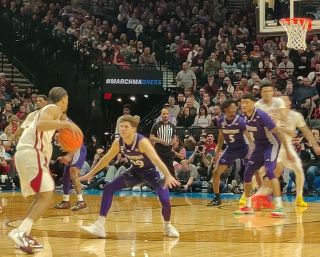
Portland, OR – The second round of the NCAA Tournament in Portland featured match-ups between Gonzaga and Texas, followed by No. 12-seed High Point facing an athletic Arkansas Razorback team.

In the opener Cam Heide made his only field goal of the game, a three-pointer with 12 seconds remaining to give Texas a four-point lead and help clinch a 72-68 win over 3-seed Gonzaga. The Zags had closed the deficit to 69-68 on the previous possession on a Graham Ike dunk. The Longhorns are one of the few remaining double-digit seeds left in the tournament, having won three games including a First Four 68-66 win over North Carolina State.

Jordan Pope (17 points) connected on two big second half three-pointers for Texas. The first one gave them a 62-56 lead with 5:30 remaining. The second shot gave them a 69-64 lead with 2:36 remaining, Matas Vokietaitas was solid inside for Texas, finishing with 17 points on 7-of-11 from the field with nine rebounds. Vokietaitas made it difficult for Graham Ike inside. Ike led the Zags with 25 points but was an inefficient 10-of-22 from the field. He was bottled up on the boards, only getting three rebounds, committed three turnovers and was charged with four fouls trying to contain Vokietaitas.

Gonzaga hasn’t been the same team since Braden Huff was injured. Tonight, they didn’t shoot reliably, only converting on 4-of-16 from deep. They only turned the ball over seven times, but Texas took advantage of them with an 11-2 edge in points off turnovers. Texas only committed five turnovers.

Thefirst half was close throughout with Texas taking a 35-33 lead into the break on a Pope three-pointer with six seconds remaining. Pope led the Longhorns with nine points while Ike scored 11 points for Gonzaga. The stats were basically even and both teams took care of the ball throughout the half, with Gonzaga only committing four turnovers while Texas had only one turnover.

In a thrilling second game Arkansas outlasted a strong High Point Panthers squad 90-83 led by 36 points from Darius Acuff. 5’11 Point guard Rob Martin was impressive for the Panthers, scoring 30 points and continually getting past Razorback defenders.

The game was close throughout with Arkansas taking a 43-42 lead into halftime. High Point went on a 10-0 run early in the second half to take a 56-52 lead, with six of those points by Terry Anderson (15 points, 6 assists).  The Panthers took their last lead (72-71) on am Owen Aquino basket with 7:04 remaining. The game was tied at 83 when Acuff took over. He scored seven straight points, the first two baskets on drives to the hoop and then he calmly swished a 24-foot three-pointer from the wing. That gave the Razorbacks a 90-83 lead and enough space to hold off High Point at the end.

Acuff was exceptional. He needs to be in serious consideration as the first point guard taken in the NBA draft. He plays with pace and can speed up and get past his defender at will. He’s strong enough to score inside after contact and is likely the best shot-maker in college basketball this season. Tonight, he was 11-of-22 from the field (3-of-6 3s) and added six assists against only two turnovers.

The Razorbacks basically played only six players with Karter Knox and Nick Pringle out with injuries. Acuff received help from Maleek Thomas (19 points on 3-of-5 from deep), Malique Ewin (14 points, 12 rebounds) and Billy Richmond (15 points, 10 rebounds).

Martin was exceptional for the Panthers. He had five assists in addition to his 30 points on 11-of-23 from the field. He might be the quickest guard I’ve seen this season with extreme explosiveness off the dribble.  He was supported by 25 points and 8 rebounds from 6’7 Cam’Ron Fletcher. Fletcher had previously played at Kentucky for current Arkansas coach John Calipari.

This article was written by Carl Berman, Managing Partner of NetScouts Basketball. You can follow us on Instagram, or on twitter.

We are looking for those interested in our basketball scout apprenticeship program. For information contact us and forward your resume.

Portland, OR – The High Point Panthers and the Arkansas Razorbacks advanced from the first round at the NCAA Tournament in Portland in the afternoon session. High Point, a 12-seed, upset the 5seed Wisconsin Badgers in an 83-82 thriller. Arkansas, a 4-seed, had no issues dispatching 13-seeded Hawai’i 97-78.

High Point was trailing 68-61 with less than eight minutes remaining before they staged their comeback. Chase Johnston’s three-pointer pulled them to within 82-81 with 55 seconds remaining. After the Badgers’ Nick Boyd missed on a shot inside, Johnston received a long pass and scored the go-ahead lay-up with 11 seconds left in the game. It was Johnston’s first two-point basket of the season. Wisconsin had one more chance, but Boyd’s attempt was blocked at the rim. High Point’s Cam’Ron Fletcher missed the front end of a 1-ad-1 with 1.8 seconds left but Wisconsin couldn’t get a shot off at the buzzer.

Wisconsin’s Boyd had no problem getting to the basket. He scored ten points in the last four minutes with his last two-pointer giving the Badgers an 82-78 lead. Boyd scored 27 points on 10-of-20 shooting with seven rebounds and six assists against only one turnover.  John Blackwell added 20 points and 10 assists but was charged with five turnovers. Point guard Rob Martin was impressive for the winners, scoring 23 points and dishing out 10 assists while committing only one turnover.  The hero of the game, Johnston, added 14 points on 4-of-6 three=pointers along with his lone layup. During this season Johnston connected on 68 three-pointers before making the deciding layup.

High Point connected on 15-of-40 3’s while the Badgers made 9-of-23. High Point has been particularly effective this season in not turning the ball over, raked No. 4 in the country with a 12.9% turnover rate. Today they only committed six turnovers against Wisconsin’s ten. They also took advantage of fast break opportunities, sconing 16 fast break points while Wisconsin had only five.

Arkansas had a wire-to-wire win in the nightcap over Hawai’i. The Razorbacks showcased their athleticism with multiple dunks from multiple players.  They raced out to an 11-0 lead and took a 54-36 advantage into halftime. Hawai’i could not make any serious runs in the second half and the game was never in doubt.

SEC Player of the Year, Darius Acuff led the winners with 24 points on 9-of-19 shooting (2-of-5 3’s) and added three rebounds and seven assists. Acuff has been moving up the draft boards as the season progressed with his strong overall play, shot making and point guard skills. He’s averaging 22.9 points per game while shooting 44.4% on 179 three-pointers and has almost a 3 to 1 assist to turnover ratio. Arkansas essentially played only six players. Meleek Thomas was impressive with 21 points and added eight rebounds and five assists as well as a few highlight dunks. Trevon Brazille added 19 points, sox rebounds and three blocks and Malique Ewin contributed 16 points and 12 rebounds (6 offensive).

Arkansas shot only 4-of-21 from deep but dominated inside (64-40 point advantage) and on the fast break (23-12 point advantage). High Point will try for another upset on Saturday but Arkansas looks too big and athletic for them.

This article was written by Carl Berman, Managing Partner of NetScouts Basketball. You can follow us on Instagram, or on twitter.

We are looking for those interested in our basketball scout apprenticeship program. For information contact us and forward your resume.

New York, NY – On the final day of the Big East Tournament at Madison Square Garden, the conferences’s two top teams squared off in what many expected to be an instant classic. Instead, it was the St. John’s Red Storm who controlled the game from start to finish, dominating UConn for the full 40 minutes to secure back-to-back Big East Tournament championships. The Johnnies never surrendered the lead, and the Huskies never truly looked like they had a chance to mount a comeback, as the game ended in a decisive 72–52 victory for St. John’s.

Similar to St. John’s previous two games in the tournament, attacking the paint was once again a major point of emphasis. A key part of that approach was consistently feeding the ball to the low block, where Big East Tournament Most Outstanding Player Zuby Ejiofor made a significant impact. The senior big man finished with 18 points on an efficient 7-of-11 shooting from the field, while also knocking down two three-pointers.

Ejiofor wasn’t the only one finding success inside. Bryce Hopkins also showcased impressive back-to-the-basket ability, using polished footwork to create space and convert several heavily contested shots around the rim. Hopkins matched Ejiofor’s scoring output, finishing with 18 points of his own on an efficient 7-of-9 from the field.

To add to the Red Storm’s strong offensive performance, they were just as dominant on the defensive end. St. John’s held the Huskies to a stifling 34% from the field and forced 17 turnovers, disrupting nearly everything UConn tried to run, from what looked like clean entry passes to blowing up dribble handoffs. Leading the defensive effort was none other than Zuby Ejiofor. He finished with 3 steals and an impressive 7 blocks, protecting the rim and giving the Huskies nothing easy in the paint. Dylan Darling also made a major impact defensively, matching Ejiofor’s steal total with 3 of his own. Darling did an excellent job reading ball handlers, timing their dribble cadence perfectly and picking their pockets at key moments.

The lone bright spot for the Huskies in this game was senior big man Tarris Reed. Reed finished with 17 points on 8-of-17 shooting from the field while adding 7 rebounds. Similar to St. John’s approach with Ejiofor, UConn made a concerted effort to get the ball down low and take advantage of the Reed–Ejiofor matchup. Reed did a solid job using his size and strength to back Ejiofor down and convert several easy hook shots around the rim.

Despite Reed’s strong performance, it was difficult for the Huskies to keep pace while shooting just 16% from three-point range. UConn’s typical perimeter threats—Solo Ball, Braylon Mullins, and Alex Karaban—struggled throughout the game, combining to shoot just 2-of-14 from beyond the arc.

With the Big East Tournament now complete, the attention quickly shifts to Selection Sunday, where the conference’s postseason picture will officially come into focus. St. John’s, UConn, and Villanova are all expected to hear their names called, and the biggest question now becomes where each team will land in the NCAA Tournament bracket. After St. John’s dominant run through Madison Square Garden, the Red Storm will look to carry that momentum into The Big Dance, while UConn and Villanova await their seeding as they prepare for the next stage of the postseason.

This article was written by William Murphy, a correspondent and scout for NetScouts Basketball. You can follow us on Instagram, or on twitter.

We are looking for those interested in our basketball scout apprenticeship program. For information contact us and forward your resume.

New York, NY – Friday’s semifinals of the Big East Tournament at Madison Square Garden featured two teams that firmly controlled their matchups from start to finish. Although the final score may suggest a closer game, St. John’s largely dominated from the opening tip, rarely taking its foot off the gas on the way to a 78–68 victory over the Seton Hall Pirates.The second semifinal followed a similar script, as UConn never surrendered the lead against Georgetown, cruising to a 67–51 win to punch its ticket to the championship game.

St. John’s entered their game with a clear plan: attack the paint. Early and often in the first half, the Johnnies fed Zuby Ejiofor and Dillon Mitchell on the block, where both were able to finish with ease. When the initial shot didn’t fall, they frequently drew contact and earned trips to the free-throw line. Ejiofor (20 points), Mitchell (13 points), and Bryce Hopkins (13 points) combined for 46 of St. John’s 78 points, consistently applying pressure on Seton Hall’s interior defense.

For Seton Hall, much like in the quarterfinal round, the Pirates were led by Budd Clark and Jacob Dar. Clark finished with 17 points and showcased strong playmaking ability, adding 11 assists. Dar continued his impressive run in the Big East Tournament as well, finishing with 13 points and 4 rebounds while making multiple hustle plays that helped keep the Pirates competitive.

UConn was led by projected lottery pick and freshman Braylon Mullins. Mullins finished with 21 points on 8-of-17 shooting from the field and 2-pf-9 from beyond the arc. Despite the modest numbers from long distance, he showed that his game is far from dependent on his perimeter shooting. Mullins flashed some surprising back-to-the-basket ability and was particularly impressive with several difficult, off-balance midrange shots that he knocked down with ease.

For Georgetown, Vince Iwuchukwu led the way with 11 points and 5 rebounds. Iwuchukwu displayed impressive athleticism throughout the game, elevating through contact and converting several tough finishes over UConn big men Eric Reibe and Tarris Reed.

With the semifinal round complete, the stage is now set for the Big East Tournament championship at Madison Square Garden. St. John’s and UConn will meet tonight with the conference title on the line, setting up a highly anticipated matchup between two teams that looked dominant in their semifinal victories. With momentum on both sides, the championship game promises to bring the intensity and high-level play that has defined the tournament all week.

This article was written by William Murphy, a correspondent and scout for NetScouts Basketball. You can follow us on Instagram, or on twitter.

We are looking for those interested in our basketball scout apprenticeship program. For information contact us and forward your resume.